Why Ice Is Slippery: A New Study Rewrites 200 Years of Physics
Quick pop quiz.
You’re ice skating and glide smoothly across the rink. What’s actually making the surface of ice so slippery?
A) Pressure from your skate melts the surface
B) Friction creates heat that melts a thin water layer
C) Your shoe’s molecules yank the ice’s molecules out of alignment
D) The ice is just naturally wet on top
If you said A or B, don’t feel bad. I said the same thing for years. So did your physics teacher. So did pretty much every textbook since the 1800s.
Turns out, we were all wrong.
A new study from Saarland University just overturned nearly two centuries of accepted science. And once you understand what actually makes ice slippery, you can’t unsee it.
The 200-Year-Old Theory: Where It All Started
Let’s rewind to 1850.
James Thomson brother of Lord Kelvin proposed a neat idea: pressure on the ice lowers the melting point. When you step on ice, your body weight creates enough pressure to melt a thin layer on the surface of ice. That film of water acts as a lubricant, and you slide.
His brother William (later Lord Kelvin) verified this experimentally. The math checked out. The theory spread.
By 1886, an engineer named John Joly took it further. He calculated that an ice skate blade exerts around 466 atmospheres of pressure enough to drop the melting temperature to about −3.5°C. At that point, a thin lubricating liquid film would form beneath the blade, letting the skater glide.
This became the textbook answer for generations: pressure or friction causes ice to melt, creating a liquid layer on ice that lets you slide.
Simple. Elegant. And not quite right.
The Problem Nobody Could Explain
Here’s where things get weird.
If the pressure melting theory were correct, ice skating should be impossible below about −3.5°C. The pressure from a skate blade simply can’t lower the melting point any further.
But people ski at −30°C. They slip on ice at −40°C. Antarctic researchers have slipped on ice at temperatures well below freezing, colder than anything the pressure theory can explain.
In 1939, researchers Bowden and Hughes noted this problem. They found that pressure melting doesn’t work to explain why skiers slide on snow at very low temperatures. Something else had to be going on.
Even more puzzling: in 1850, the same year Thomson proposed his theory, Michael Faraday suggested something completely different. He believed there was always a liquid-like layer on top of the ice, even at temperatures below the melting point. He called this phenomenon “premelting.”
Faraday was largely ignored for almost a century. But he was onto something.
What Actually Makes Ice Slippery: The New Science
Fast forward to 2025.
Professor Martin Müser and his colleagues at Saarland University, working with researchers at the Max Planck Institute, finally cracked it. Their paper in Physical Review Letters explains why ice is so slippery, and it has nothing to do with pressure or friction melting the surface.
Here’s what’s really happening.
Every water molecule has a slightly positive end and a slightly negative end, like a tiny bar magnet. Scientists call this a molecular dipole. In solid ice, all these molecular dipoles line up in a neat hexagonal crystalline structure, positive-to-negative, holding the crystal structure together in a rigid lattice.
Now imagine your boot landing on that hexagonal ice surface.
The rubber in your boot also has molecules with positive and negative ends. When those molecules get close to the ice surface, they start pulling on the ice’s molecular dipoles. Yanking them out of alignment. Twisting them around.
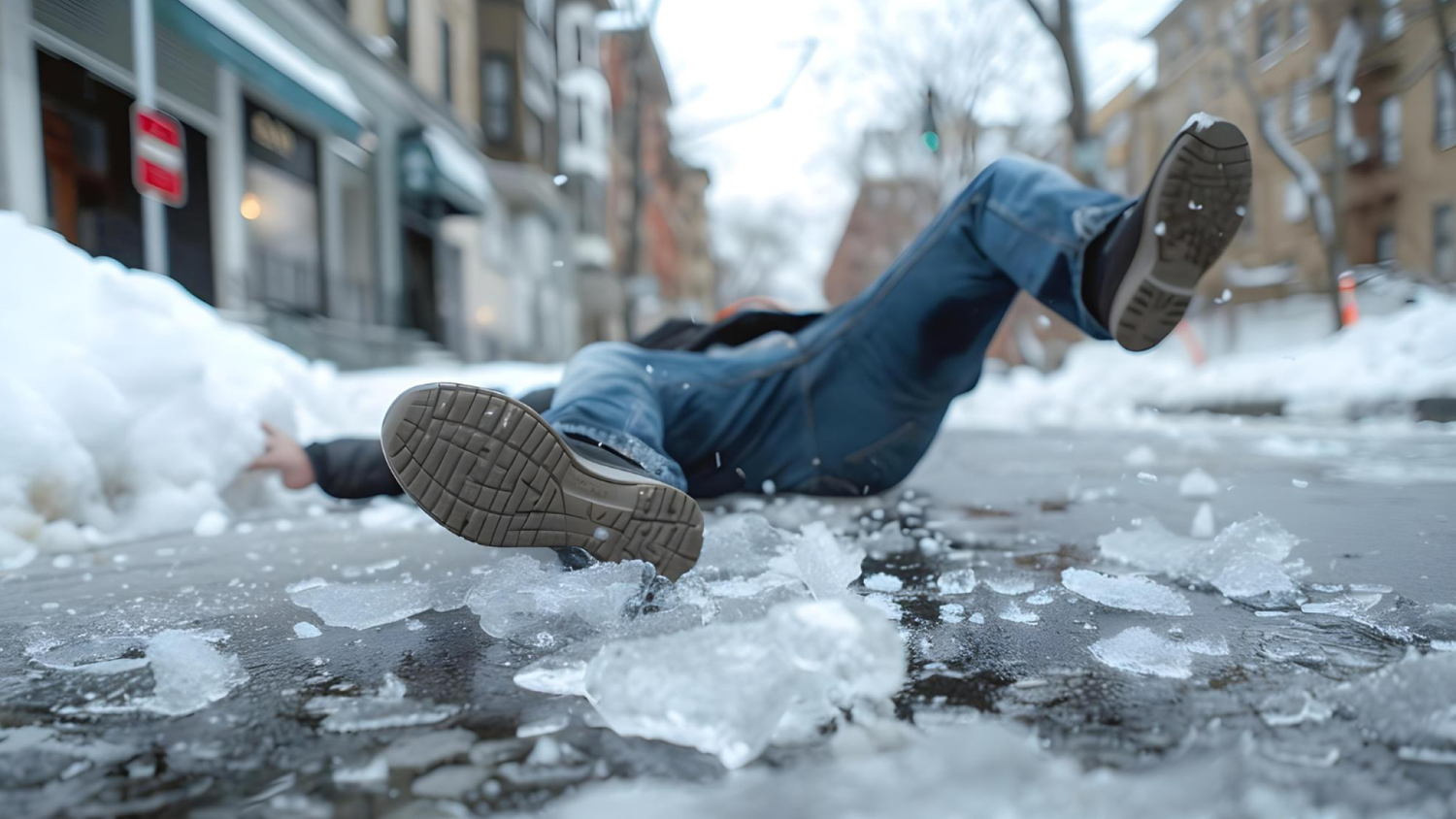
Source: Freepik (AI Generated Image)
The surface molecules get “frustrated.”
That’s the actual physics term. When competing forces prevent molecules from settling into an orderly state, physicists call it frustration. And frustrated molecules don’t stay put.
The neat ice’s structure falls apart, but only on that top nanometer-thin layer of molecules. The crystalline structure collapses into something disordered, amorphous, and liquid-like.
The result? A watery layer that acts as a lubricant. But here’s the thing: no ice had to melt to create it. The orientation of the dipoles simply got disrupted by contact with another material.
This explains why ice is slippery due to molecular interactions, not temperature changes.
The Experiment That Proved It
The Saarland team tested it.
Using advanced computer simulations, they modeled exactly what happens at the interface between ice and various materials. The simulation showed that materials with stronger molecular dipoles caused more surface disruption. More disruption meant more slipperiness.
They also reviewed decades of atomic force microscopy studies. An atomic force microscope can detect forces at the molecular level, letting scientists observe exactly what happens when different substances contact the ice surface.
The findings were clear: the thin film on ice forms through what researchers call “cold displacement-driven amorphisation.” The crystalline surface becomes disordered purely through contact and sliding motion, not through any thermal energy or pressure melting.
In fact, here’s the part that completely nukes the old theory: ice at extremely low temperatures can become slippery faster than ice closer to its melting point.
Why Ice Is Slippery at −238°F
This is where it gets wild.
Ice is still slippery at −238°F. That’s −150°C. That’s colder than some moons in our solar system.
At temperatures that far below the melting temperature, there’s no way pressure or friction could generate enough energy to melt anything. The ice to melt would require a massive temperature increase that simply isn’t happening.
But the slipperiness of ice persists. Walk on ice at −100°F, and you’ll still slip on ice. The surface becomes slippery even when melting is physically impossible.
Why? Because this electrical disruption doesn’t care about temperature.
The surface molecules are vulnerable to being yanked around, even at ice at low temperatures near absolute zero. The frustration happens instantly when contact is made. No heat required. No pressure required. Just molecular dipoles interacting with each other.
This is why the old pressure theory from Lord Kelvin and James Thomson could never fully explain ice. Their model only works near the melting point. This new mechanism works everywhere, even on frozen moons millions of miles from the sun.
But Wait, What About Faraday’s Premelting?
Remember Michael Faraday’s 1850 hypothesis about a liquid layer always existing on ice?
He was partially right.
Scientists have since confirmed that ice does have a quasi-liquid layer (QLL) at its surface, even at temperatures below freezing. This premelting phenomenon creates a thin layer that’s not quite solid, not quite liquid. It’s somewhere in between: viscous, disordered, and slippery.
But here’s what Faraday didn’t know: this quasi-liquid layer is actively created and enhanced when something touches the ice.
The new research shows that contact with materials such as your shoes, skis, ice skates, dramatically amplifies this effect. The molecular dipole interactions take that pre-existing surface instability and crank it up, creating an even more liquid-like film right where you need it (or don’t need it, if you’re trying not to fall).
So premelting sets the stage. Molecular frustration steals the show.
Ice Gets Even Weirder
While researching this, I fell down a rabbit hole. Here’s some other stuff about ice that broke my brain.
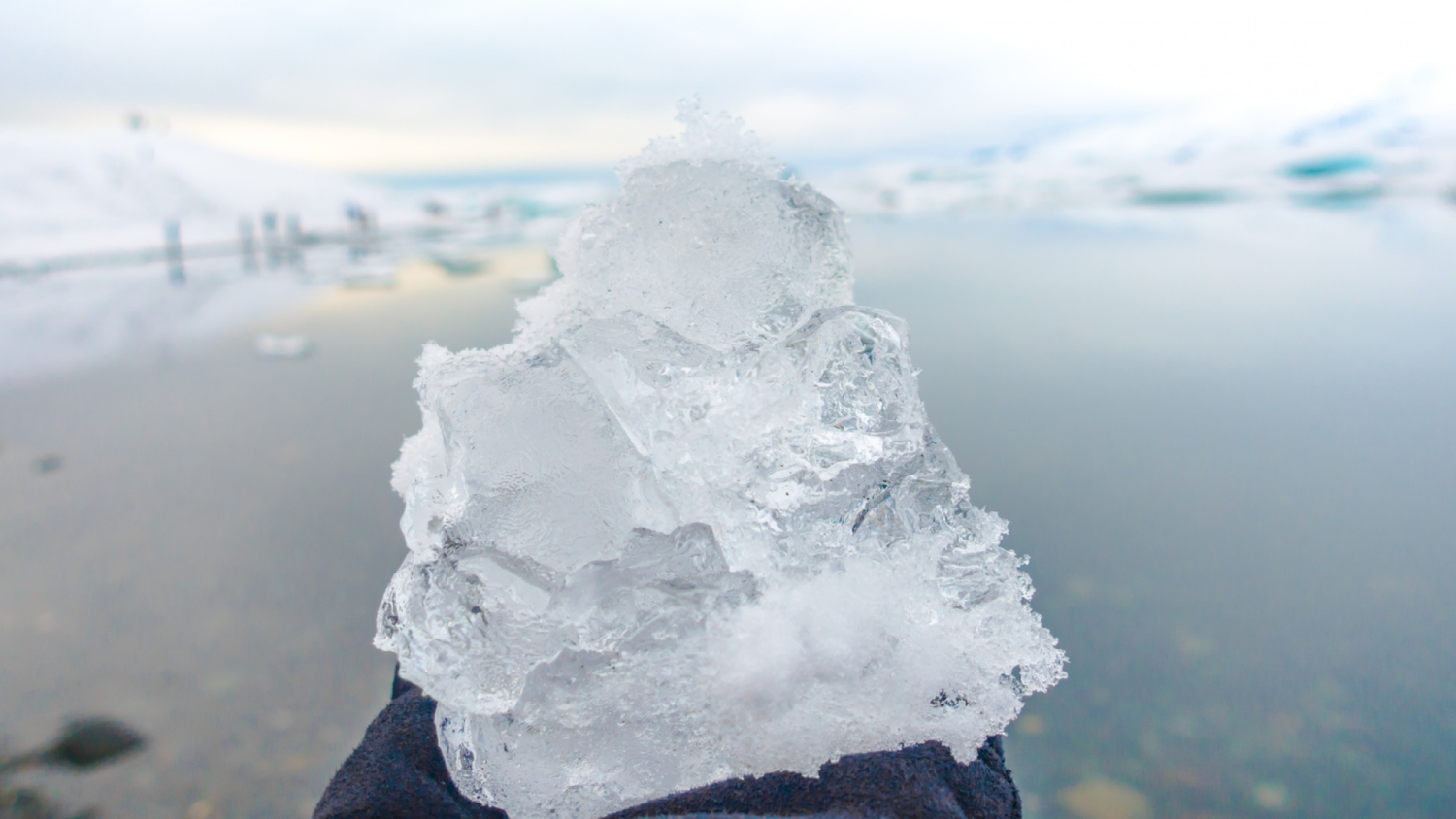
Credit: Brody Chemicals
Ice has way more than two types of ice.
According to the American Chemical Society, theoretical models predict anywhere from 20 to 74,963 different crystalline structures. Scientists confirmed Ice XXI in 2025, yes, they named it like a Marvel character.
We’re dealing with hexagonal ice (the common form we see), cubic ice, amorphous ice, and dozens of high-pressure phases. It’s not one substance. It’s a multiverse of subtly different forms, each with slightly different properties.
Ice makes electricity when you bend it.
A 2025 research team from Barcelona, Xi’an Jiaotong University, and Stony Brook found that ice produces voltage when bent or unevenly deformed. Flex it slightly, and you get a tiny electrical charge.
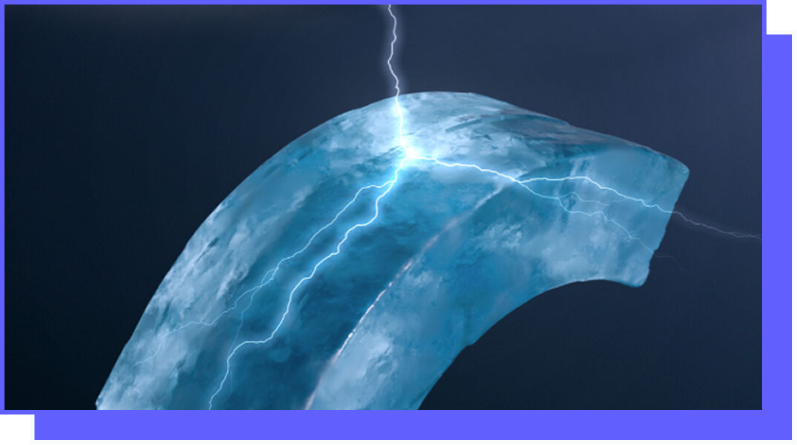
Credit: Universitat Autonoma de Barcelona
Below −171°F, ice becomes a switchable magnet.
At extremely low temperatures, ice develops a surface layer that responds to electric fields. Apply a field, and you can flip which end is positive or negative.
Put these together, and lightning starts making more sense. When ice particles in clouds smash into each other, the bending and colliding generate electrical charge through these piezoelectric and ferroelectric effects. Do that a few billion times and you’ve got enough buildup for a bolt.
What Does This Change For Engineering?
Understanding what makes ice slippery reshapes engineering across multiple fields.
Winter tires
Future tires could be designed with materials whose molecules don’t interact as strongly with ice surfaces. Instead of fighting friction with more aggressive treads, engineers can work with the physics, creating rubber compounds that simply don’t yank on ice molecules as much.
Anti-slip shoes
Instead of more / sharper spikes, the solution is to use materials with molecular properties that minimize dipole interactions with ice. Walk on ice without the slip, not by gripping harder, but by not triggering the slippery response in the first place.
Ski and skate design
Blades could be engineered to control exactly how much they disrupt the surface of the ice. Want more speed? Use materials that create maximum surface disruption for a better glide. Need more control? Dial it back. Ice skates become tunable based on molecular science, not just blade geometry.
Space robotics
Spacecraft operating on icy moons like Europa, Enceladus, and Titan need predictable traction. Engineers have been dealing with traction anomalies for years, robots slipping when calculations said they shouldn’t. This research finally explains why. At lower temperatures, the old friction models simply don’t apply.
Nanotechnology
Control molecular interactions and you control friction. At the nanoscale, understanding the interface between ice and other materials opens new possibilities for precision engineering, from medical devices to manufacturing.
Why Did It Take 200 Years to Figure This Out?
Good question.
Part of it is that the pressure melting theory was “good enough” for most purposes. It explained everyday experience reasonably well, even if it couldn’t handle edge cases like extreme cold.
Part of it is technology. The atomic force microscope and advanced computer simulations needed to observe molecular-level interactions simply didn’t exist until recently.
And part of it is scientific inertia. When Lord Kelvin’s brother proposes a theory and Lord Kelvin himself verifies it experimentally, that carries weight. Textbooks get written. Teachers teach it. Students learn it. The cycle continues.
It took researchers willing to question a 200-year-old assumption and the tools to test their alternative to finally crack the case.
The Bottom Line: Why Ice Is Actually Slippery
So next time you slip on ice, don’t blame a little bit of water from melting. Blame frustrated molecular magnets.
Ice is slippery because your shoe’s molecules pull on the lattice, disrupting the hexagonal ice structure and creating a disordered, liquid-like surface layer.
This thin film acts as a lubricant, but it forms through molecular frustration, not phase change.
This happens whether it’s 32°F or −238°F. No need to heat the ice. No ice needs to melt. Just molecular frustration at the surface, turning a neat crystalline structure into a slippery, amorphous mess.
The implications stretch from winter sidewalks to ski slopes to icy moons in deep space. It reshapes how scientists think about friction, motion, and structural changes at the molecular scale.
And it reminds us that even the most ordinary everyday experiences, like slipping on a frozen sidewalk, can hide unexpected science that takes two centuries to uncover.
Turns out we aren’t the only ones who get frustrated.
Water World Roundup
1)Self-Powered Sensor Sniffs Toxic Amines Using Only Water Flow
Credit: Techbriefs
Japanese researchers built a water sensor that detects toxic amines without batteries. The water’s own flow powers it, and it lights up when pollutants are present. Remote water-quality checks just got a lot more practical.
2)Saudi Arabia’s Desal Plants Might Become Carbon Sinks

Credit: Smart Water Magazine
Saudi Arabia is rolling out electrochemical tech that removes CO₂ while producing fresh water from seawater. If this scales, their desalination plants could work as both water factories and carbon filters. Two birds, one process.
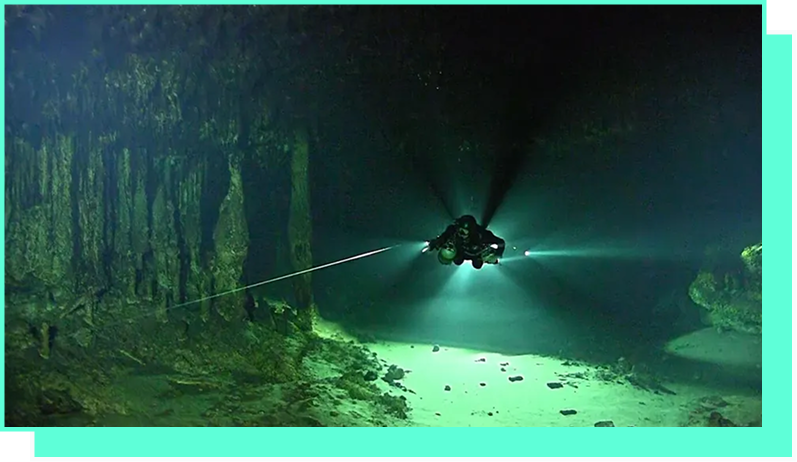
3)Earth’s Longest Underwater Cave System Just Got Longer
Credit: HP Hartmann
Mexico’s Sistema Ox Bel Ha clocked in at 325 miles of mapped passageways - the longest underwater cave system on Earth. It’s a sprawling subterranean water web that quietly keeps the Yucatán alive.
Meme of the Month

Credit: X (Formerly Twitter) handle @Justedgarnow